Latest News
AI Generated
The Labour Ladder's Missing Rung: Inside BC's Youth Employment Crisis


-
There's a frustrating silence that comes from
a job application disappearing into the void.
No rejection email, no interview, sometimes
not even an automated "thanks for applying."
Just nothing. Ask around any BC high school
this summer, and you'll hear the same story on
repeat: teenagers who've sent out fifty, a hundred, sometimes hundreds of applications for
a first job. It could be a coffee shop, a grocery
store, or a summer camp, and hearing back
from almost none of them. It's easy to chalk
that up to bad luck, a thin resume, or applying
to the wrong places. But the data tells a differ-
ent story. This isn't a personal failing. It's structural, and it's hitting British Columbia harder
than almost anywhere else in the country.
What the numbers actually say
BC's youth unemployment rate covering everyone aged 15 to 24 has been on a rough ride
over the past year and a half. It climbed as high
as 15.6% at points in 2025, spent much of early
2026 hovering between 13% and 15%, and only
in the last couple of months has started to ease.
As of June 2026, the province's youth unemployment rate sat at 12.9%, down from 15.3% in May,
a real, welcome improvement, driven by the usual summer hiring bump in retail and food service.
But that number is still nearly double BC's over-
all unemployment rate of 6.5%, and it's still well
above the pre covid norm of roughly 10-11%.
Victoria, propped up by a large public sector,
continues to post some of the lowest unemployment numbers in the province. Even the numbers
among young people aren't uniform. In June, un-
employment among 15 and 16-year-olds: the ones
just entering the job market for the very first time,
hunting for a first summer job while still finish-
ing the school year, sat at a startling 30.6%. The
youngest and most inexperienced job seekers are
carrying the heaviest weight of this slowdown.
Why it's happening
A few forces are colliding at once, and none of
them are really about young people not trying
hard enough.
Private sector hiring stalled. Much of BC's job
growth over the past couple of years has come
from government and public sector positions
rather than businesses expanding. Retail and
wholesale trade have traditionally been the
entry-point for a first job, and are seeing real
losses in recent months, even as they lead
hiring gains during peak summer season. Construction, another sector that once soaked
up a lot of young and entry level labour in
fast-growing cities like Kelowna, shed 3,000
jobs across the province in June alone as the
housing boom cooled.
Hiring has gone digital, and not in job seekers'
favour. Applicant tracking software now filters
a large share of resumes before a human ever
reads them.
There simply aren't enough entry-level spots
to go around. When hiring slows, employers
tend to freeze the newest and most junior
roles first, and those are disproportionately
the part-time, entry-level jobs that have always belonged to teenagers and young adults. Add
tariff related uncertainty weighing on manufacturing and trade exposed sectors, businesses
have even less appetite to take a chance on
someone with no track record.
The credential squeeze. It's not just 15-year-
olds competing for that first job anymore. Re-
cent graduates, some with full post-secondary
degrees, are applying for the same entry-level
retail and food service openings, pushing teen-
agers further down the list for jobs that used to
be theirs almost by default.
Some good news
The most recent data calls for cautious optimism.
Nationally, youth aged 15 to 24 added 33,000 jobs
in June 2026, mostly part-time, and the national
youth unemployment rate fell to 12.7%, its lowest
point since January. Economists have described
it as the strongest start to a summer job season
in three years. In BC specifically, the youth rate's
drop from 15.3% to 12.9% in a single month is a
meaningfully good sign, even if some of that is
the ordinary seasonal rhythm of summer hiring in
retail and food service kicking in.
What's being proposed
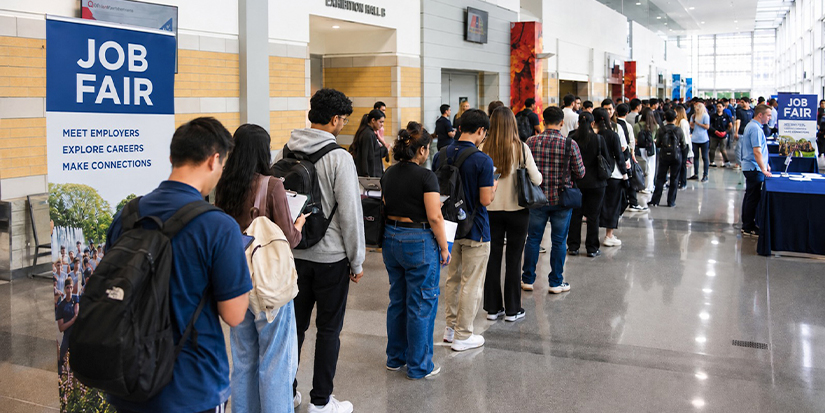
Community organizations and WorkBC employment centers across the province have also
ramped up youth-specific supports: resume
workshops, job fairs, and one-on-one coach-
ing aimed at helping teens get past that first
algorithmic screening and in front of an actual
hiring manager. These programs help, especial-
ly the human coaching that a job board alone
can't replace, but they're triage, not a fix for the
underlying shortage of entry-level positions.
The bottom line
For a teenager applying to their first job in BC
right now, the frustration of silence after silence
isn't imagined, and it isn't a reflection of effort or
ability. It's a visible symptom of a labour market
that's structurally harder on young people here
than in almost any other province, one where
entry-level jobs have shrunk faster than the population of teenagers looking for them, and where
the tools used to screen applicants have made
the process feel more automated and less human than it used to be. The most recent numbers
suggest the worst of it may be easing, at least for
now. But easing from a historic high still leaves a
lot of young people standing in line for jobs that
a decade ago would have been far easier to land.





























































































































































































2 Hours of free financial consulting
Jai Xin Planning Ltd.
C$120.00 C$0.00

Use any of our home staging service and get a second month rental for free!
MiiX Interiors
C$500.00 C$0.00

Get 10% off any order
Phantom Screens Lower Mainland
C$200.00 C$180.00