Arts & Culture
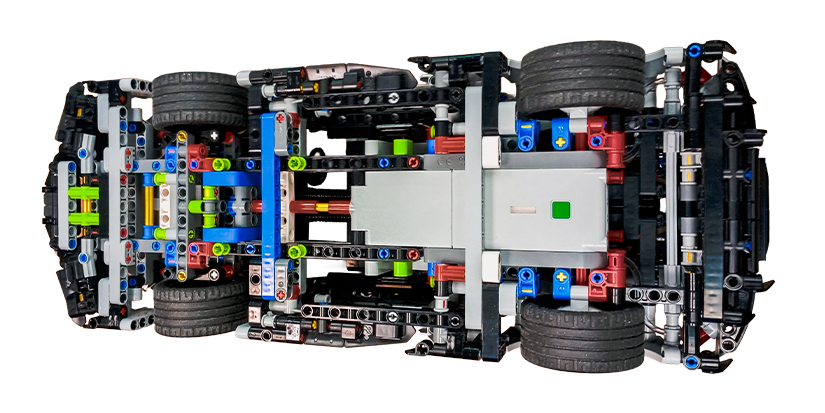
Undercarriage of the Revuelto
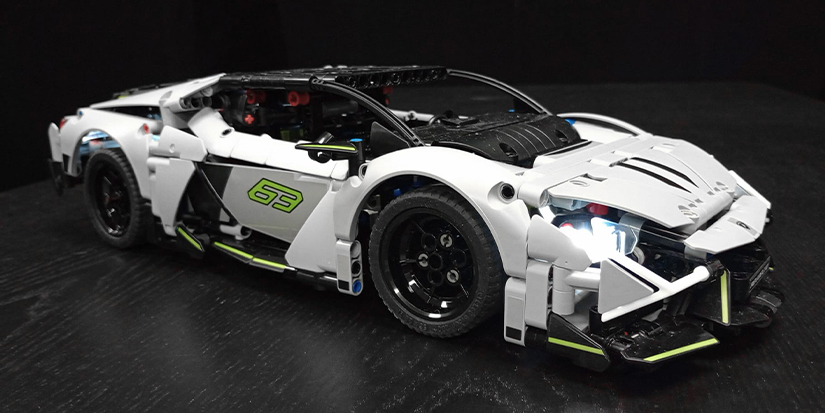
Lamborghini Revuelto with headlights on
The History of Lego

Published 3:11 PDT, Wed May 6, 2026
Last Updated: 2:40 PDT, Tue August 11, 2026


-
By Isabella Rodrigues
I’m sure that you’ve heard of Lego, but have you ever wondered where it started?
Our story starts off in Billund in 1932 with a carpenter named Ole Kirk Kristiansen; he worked hard and ran his own company creating and selling wooden furniture. However, times were hard as he lost his wife and became a single father to four kids. But Ole was a determined man, and he soon realized he had to adapt. Inspired by his children, Ole made his first ever toy with some of the wood from his shop.
Not too long after starting, Ole’s son Godtfred joined his father helping him out after school. As time passed, word began to spread about Ole and his magnificent wooden toys, and one day he was approached by a man who would change his life — a wholesaler who wanted to buy lots of his toys to sell for Christmas. The father-son duo worked diligently to make the deadline. Tragically that deal fell through after the distributor filed for bankruptcy. But Ole quickly thought up a solution; he would go and sell the toys. After some time he had sold all the stock.
Ole and Godtfred soon realized that they would need a name for their company and settled on the name "Lego," a combination of the Danish saying Leg Godt meaning to play well. The new branding worked, and Ole was soon able to afford a new milling machine and was able to make higher-quality toys. Through the 1930s, Lego continued to thrive even through the Second World War. Unfortunately, in 1942 a stormy night rocked the town of Billund, downing a power line; the sparks from it managed to start a fire in the workshop. All the toys, drawings, and machines were sadly lost to the fire. Though disheartened Ole knew he must keep going, he built a second workshop with his savings and set off for Copenhagen for a toy convention. There he saw all sorts of fascinating toys, but what caught Ole’s eye the most was a plastic moulding machine making little bricks similar to these.
After convincing Godtfred, he bought this new molding machine and the little plastic bricks that came with it. Lego soon began printing little plastic teddy bears and rattles alongside the wooden toys. Unfortunately during the summer Godtfred found that these toys were not selling as well as during the holidays. Perhaps inspired by his father, he decided he would sell the toys himself. After Godtfred’s trip across the country selling the Lego, he returned home for his father Ole’s 60th birthday. After receiving some advice from the head of a large shopping mall, Godtfred realized he needed to integrate some system into the bricks, so in 1954 Lego began introducing the Lego system of play, selling brick-built houses and more.
At the time there was just one problem: the bricks would fall apart, as the inside of the bricks were hollow. If you look at the bottom of a Lego brick, I’m willing to bet that you would find these little hollow tubes inside of it; these give the brick what is referred to as clutch power.
Tragically, in 1958, Ole Kirk Kristiansen passed away without fully getting to see where the Lego company would go on to become.
According to Lego there was a second fire around this time, reportedly destroying the wooden toy production, Godtfred pushed onward, making the decision to discontinue the wooden toys and instead focus the company’s efforts on the Lego system, fully ending their line in 1959.
In 1964 the exciting arrival of the Billund airport invited the world to see where and how Lego was made. Many guests and business people, who all wanted to see the modeling department there at Lego headquarters. So much so in fact that employees found it hard to work; Godtfred had to do something about this. After some brainstorming and planning, he decided to make an amusement park called LegoLand to display the Lego builds.
Now at this point in the story we have a lot of buildings, boats, and planes, but no people. Until 1976, when Lego released the set simply titled "Police Headquarters," Lego had made police stations before this one was unique for it included our first iteration of the Lego Minifigure.
In 1979, Godtfred steps down as CEO, moving instead to the board of directors with Ole’s grandson Keled taking his place.
In 1985, Lego made their first attempt at doing more with the Lego system with the light and sound system. These were specialized parts to simulate the lights and sounds of emergency vehicles like police cars, firetrucks and even science fiction vehicles like space- ships. Also, in 1985, the very first Lego Store outside of Denmark opened in Australia.
Just a year after that, Godtfred retires in 1986 at the age of 66.
In 1997, trying to adapt to the huge new trend that is video games, Lego produced their first game, Lego Island, which went on to sell over a million copies in its first two years.
In the late 1990s Keled tried to adapt by making more themes such as Belvile, Scala, Znap, and many others, but as each one failed, the cost of marketing, producing new parts and labor increased alongside storage for new parts and competing for shelf space. In 1998, the Lego Group reported their first annual loss of around 40 million dollars; something had to change.
Fortunately, a year later in 1999 something was going to change: Star Wars episode one had just hit theatres and Lego had its first ever licensed theme. With the new Star Wars theme came new things such as skin tones, head molds, short Minifigures, and lots more.
In the following years, many iconic themes and IPs would follow, such as Harry Potter, Disney, Mario, and even Scooby Doo.
Very recently, Lego dropped their newest project, SMART Play, under the Lego Star Wars line, giving the characters and models the ability to interact with space, each other, make sounds and, display light. Though it has been widely criticized online.
Today, Lego is an international brand with fans young and old who can enjoy the toy. Whether advanced or simple, one thing we can all agree is, we all love Lego.

























































.jpg)



.jpg)



































































-825x413.jpg)










2 Hours of free financial consulting
Jai Xin Planning Ltd.
C$120.00 C$0.00
Use any of our home staging service and get a second month rental for free!
MiiX Interiors
C$500.00 C$0.00

Get 10% off any order
Phantom Screens Lower Mainland
C$200.00 C$180.00